
A business can sell more than expected and still run out of cash.
That sounds strange until you look at how money moves. A company may generate ₹50 lakh in monthly sales, but if customers pay after 60 days, suppliers demand payment within 20 days, and payroll is due every month, the business can feel short of cash even while revenue is growing.
This is why every business needs a budget.
A business budget is a financial plan that estimates revenue, expenses, profit, cash flow, taxes, debt payments, inventory needs, and investment spending for a specific period. It helps owners decide how much they can spend, how much they need to sell, when cash may get tight, and whether growth plans are financially realistic.
A good budget is not just a spreadsheet. It is a decision tool. It shows whether the business can afford hiring, marketing, equipment, inventory, loans, rent, software, and expansion before money is committed.
Key Takeaways
- A business budget estimates income, expenses, cash flow, taxes, debt payments, and future financial needs.
- The best budget starts with real historical data, not wishful revenue targets.
- Revenue, gross margin, payroll, marketing, rent, inventory, debt, and taxes should be planned together.
- Profit and cash flow are different. A profitable business can still face a cash shortage if customers pay late or inventory absorbs too much money.
- Every budget should include a base case, downside case, and cash reserve target.
- Small businesses can create a budget for free using spreadsheets, but accounting software and professional support may be useful as the business grows.
- The budget should be reviewed every month through a budget vs actual report.
What Is a Business Budget?

A business budget is a plan that shows how much money a company expects to earn, spend, keep, borrow, and invest over a period of time.
Most businesses prepare budgets monthly, quarterly, and annually. A startup may use a 12 month cash budget. A mature company may use a full annual operating budget with departmental targets. A larger company may use a rolling forecast that updates every month or quarter.
A basic business budget usually includes:
| Budget Area | What It Shows |
|---|---|
| Revenue Budget | Expected sales by product, service, customer, location, or channel |
| Cost of Goods Sold | Direct costs required to produce or deliver the product or service |
| Gross Profit | Revenue minus direct costs |
| Operating Expenses | Payroll, rent, marketing, software, insurance, travel, utilities, and admin costs |
| Capital Spending | Equipment, vehicles, furniture, software implementation, or property improvements |
| Debt Payments | Loan principal, interest, fees, and credit line repayments |
| Tax Planning | Estimated income tax, GST, sales tax, payroll tax, or other tax obligations |
| Cash Flow Forecast | Expected cash inflows and outflows by month |
| Ending Cash Balance | Cash expected to remain after all planned activity |
The budget should answer one practical question:
Can the business afford its plan?
If the answer is unclear, the budget is not finished.
Why a Business Budget Matters
A budget gives business owners control before financial problems become urgent.
Without a budget, spending decisions often happen one by one. A new software subscription looks small. A marketing campaign feels necessary. A new hire seems affordable. Inventory feels safe to order. But when all of those choices land in the same month, cash can disappear quickly.
For example, suppose a business expects ₹25 lakh in monthly revenue and a 40% gross margin.
That creates ₹10 lakh in gross profit.
If fixed monthly operating expenses are ₹8.5 lakh, expected operating profit is ₹1.5 lakh.
Now assume supplier costs rise by 5 percentage points and gross margin falls from 40% to 35%.
Gross profit becomes:
₹25 lakh × 35% = ₹8.75 lakh
Operating profit falls to:
₹8.75 lakh − ₹8.5 lakh = ₹25,000
The business is still selling the same amount, but most of the profit has disappeared.
A budget helps catch this early. It also helps owners plan cash reserves, reduce waste, control debt, and decide when to invest.
Step 1: Choose the Budget Period
Start by deciding the time period.
Most small businesses should prepare a monthly budget for the next 12 months. Monthly planning is useful because rent, payroll, loan payments, subscriptions, and supplier bills usually happen monthly.
A 12 month budget also helps identify seasonal pressure.
For example, a retail business may earn most revenue during festive months but spend heavily on inventory before sales arrive. A tax consultancy may earn more during filing season. A travel business may see revenue rise during holidays and fall during off season months.
A simple structure may look like this:
| Month | Revenue | Gross Profit | Operating Expenses | Net Profit | Ending Cash |
|---|---|---|---|---|---|
| April | ₹18 lakh | ₹7.2 lakh | ₹6.5 lakh | ₹70,000 | ₹5.4 lakh |
| May | ₹20 lakh | ₹8 lakh | ₹6.8 lakh | ₹1.2 lakh | ₹6.1 lakh |
| June | ₹16 lakh | ₹6.4 lakh | ₹6.7 lakh | ₹(30,000) | ₹4.8 lakh |
Annual numbers are helpful, but monthly numbers reveal cash pressure.
Step 2: Collect Your Historical Financial Data
A budget should start with actual business data.
Collect at least 12 months of financial information. If the business is seasonal, use two or three years if available.
You should gather:
- Sales reports
- Profit and loss statements
- Balance sheets
- Bank statements
- Payroll reports
- Loan statements
- Inventory reports
- Supplier bills
- Tax filings
- Marketing spend reports
- Software subscription records
- Rent and utility bills
- Insurance documents
For U.S. companies, the IRS notes that businesses should keep records that support income, deductions, credits, and other tax return items until the period of limitations expires for that return. Good recordkeeping also makes budgeting easier because owners can see what was actually earned and spent.
Do not build the budget from memory. Owners often underestimate recurring expenses because small monthly costs are easy to forget.
A ₹2,000 tool, ₹4,000 plugin, ₹7,500 software plan, and ₹12,000 service contract may not feel large individually. Together, they create ₹25,500 in monthly fixed costs and ₹3.06 lakh annually.
Step 3: Forecast Revenue Realistically
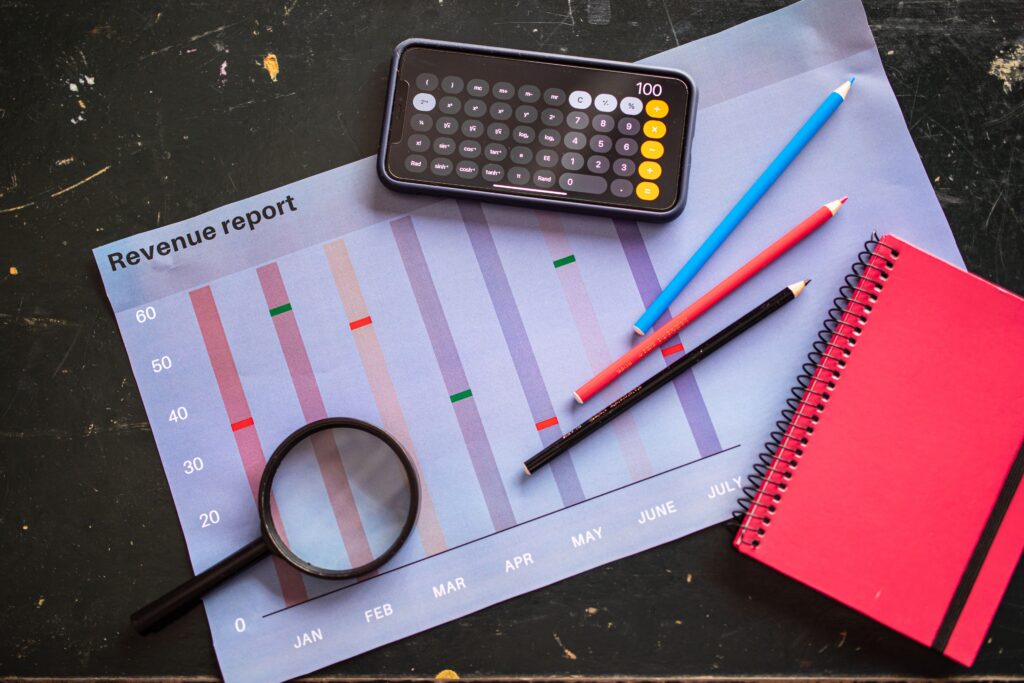
Revenue is usually the first line in a business budget, but it should not be guessed.
There are several ways to forecast revenue.
Use Prior Year Sales
If the business is stable, start with last year’s monthly sales and adjust for expected growth.
Example:
| Month | Last Year Revenue | Expected Growth | Budget Revenue |
|---|---|---|---|
| April | ₹18 lakh | 10% | ₹19.8 lakh |
| May | ₹20 lakh | 10% | ₹22 lakh |
| June | ₹16 lakh | 10% | ₹17.6 lakh |
This method is simple and useful for mature businesses.
Use Unit-Based Forecasting
For product businesses, budget revenue by units and selling price.
Revenue = Units Sold × Average Selling Price
Example:
| Product | Expected Units | Average Price | Budget Revenue |
|---|---|---|---|
| Product A | 1,200 | ₹1,500 | ₹18 lakh |
| Product B | 600 | ₹2,200 | ₹13.2 lakh |
| Product C | 350 | ₹3,000 | ₹10.5 lakh |
This method helps management see whether revenue growth depends on price, volume, or product mix.
Use Customer-Based Forecasting
For service businesses, forecast by client count and average monthly billing.
Revenue = Number of Clients × Average Monthly Billing
If an agency expects 25 clients at ₹60,000 per month:
25 × ₹60,000 = ₹15 lakh monthly revenue
If three clients leave, revenue falls to:
22 × ₹60,000 = ₹13.2 lakh
That ₹1.8 lakh monthly difference can change hiring and cash decisions.
Step 4: Budget Cost of Goods Sold

Cost of goods sold, often called COGS, includes direct costs required to produce or deliver what you sell.
For a product business, COGS may include raw materials, packaging, manufacturing labor, shipping, import duties, and marketplace fees.
For a service business, direct costs may include contractor payments, client-specific software, delivery staff, payment processing fees, and project materials.
Gross profit is calculated as:
Gross Profit = Revenue − Cost of Goods Sold
Gross margin is:
Gross Margin = Gross Profit ÷ Revenue
Example:
| Item | Amount |
|---|---|
| Revenue | ₹30 lakh |
| Cost of Goods Sold | ₹18 lakh |
| Gross Profit | ₹12 lakh |
| Gross Margin | 40% |
Gross margin matters because it shows how much money remains to cover payroll, rent, marketing, software, tax, debt, and profit.
The Bureau of Labor Statistics Producer Price Index measures the average change over time in selling prices received by domestic producers for their output. Businesses that buy raw materials, manufactured goods, or other inputs should review supplier cost trends before assuming last year’s margins will continue.
Step 5: Budget Fixed and Variable Operating Expenses
Operating expenses are the costs of running the business after direct production or delivery costs.
Split them into fixed and variable costs.
Fixed Costs
Fixed costs stay mostly the same even if sales change.
Examples include:
- Rent
- Salaries
- Insurance
- Accounting fees
- Software subscriptions
- Website hosting
- Internet and phone
- Loan interest
- Security services
- Office maintenance
Variable Costs
Variable costs rise or fall with activity.
Examples include:
- Sales commissions
- Shipping
- Packaging
- Payment processing fees
- Freelancer costs
- Travel
- Performance marketing
- Marketplace fees
- Customer support volume costs
A clean expense budget may look like this:
| Expense Category | Monthly Budget | Annual Budget |
|---|---|---|
| Salaries and Wages | ₹6,00,000 | ₹72,00,000 |
| Rent | ₹1,20,000 | ₹14,40,000 |
| Marketing | ₹2,50,000 | ₹30,00,000 |
| Software | ₹85,000 | ₹10,20,000 |
| Insurance | ₹30,000 | ₹3,60,000 |
| Accounting and Legal | ₹40,000 | ₹4,80,000 |
| Internet and Utilities | ₹35,000 | ₹4,20,000 |
| Travel | ₹50,000 | ₹6,00,000 |
| Total Operating Expenses | ₹12,10,000 | ₹1,45,20,000 |
The budget should separate essential expenses from optional expenses. This makes cost cutting easier during a weak month.
Step 6: Build a Payroll and Hiring Budget
Payroll is often the largest cost in a business.
Do not budget payroll as one rough number. Create a separate hiring plan.
| Role | Monthly Cost | Start Month | Annual Budget Impact |
|---|---|---|---|
| Existing Team | ₹6,00,000 | April | ₹72,00,000 |
| Sales Executive | ₹70,000 | July | ₹6,30,000 |
| Operations Assistant | ₹45,000 | September | ₹3,15,000 |
| Content Manager | ₹80,000 | October | ₹4,80,000 |
This prevents one of the most common budgeting mistakes: approving hiring based on annual revenue without checking monthly cash impact.
A new employee may create costs beyond salary, including payroll taxes, benefits, laptop, software, training, recruiter fees, and manager time.
Step 7: Budget Marketing Based on Return, Not Hope
Marketing is easy to overspend because it feels connected to growth.
A better approach is to connect marketing to expected revenue.
Example:
| Channel | Monthly Spend | Expected Leads | Conversion Rate | Expected Customers | Revenue Per Customer |
|---|---|---|---|---|---|
| Google Ads | ₹1,50,000 | 300 | 5% | 15 | ₹20,000 |
| SEO Content | ₹80,000 | Long term | N/A | N/A | N/A |
| Email Marketing | ₹30,000 | 2,000 | 1.5% | 30 | ₹8,000 |
| Influencer Campaign | ₹90,000 | 500 | 3% | 15 | ₹12,000 |
The budget should show expected return and timing.
SEO may not produce immediate revenue, but it can build organic traffic over time. Paid ads may generate faster sales but can become expensive if customer acquisition cost rises.
The question is not only “How much should we spend?”
The better question is:
What result must this spending produce to be worth it?
Step 8: Add Debt, Taxes, and Owner Draws
A budget that ignores loan repayments and taxes is incomplete.
Debt affects cash flow even when it does not fully appear as an expense on the income statement. Interest is an expense. Principal repayment reduces cash but does not reduce profit in the same way.
Example:
| Debt Item | Monthly Amount |
|---|---|
| Loan Interest | ₹45,000 |
| Loan Principal | ₹1,20,000 |
| Total Monthly Debt Cash Outflow | ₹1,65,000 |
Taxes also need planning.
Depending on the country, entity type, and business activity, a company may need to budget for income tax, GST, VAT, sales tax, payroll tax, property tax, professional tax, or withholding tax.
For U.S. taxpayers using part of their home for business, the IRS says deductible expenses may include the business portion of items such as rent, utilities, insurance, depreciation, maintenance, and repairs, subject to rules on business use.
The same principle applies everywhere: tax treatment should be checked early, not after cash has already been spent.
Step 9: Create a Cash Flow Forecast

Profit is not cash.
A business can show profit but still run short if invoices are unpaid, inventory is high, or debt payments are due.
A cash flow forecast shows when cash enters and leaves the bank.
| Month | Opening Cash | Cash Inflows | Cash Outflows | Ending Cash |
|---|---|---|---|---|
| April | ₹8,00,000 | ₹20,00,000 | ₹18,50,000 | ₹9,50,000 |
| May | ₹9,50,000 | ₹18,00,000 | ₹21,00,000 | ₹6,50,000 |
| June | ₹6,50,000 | ₹24,00,000 | ₹19,50,000 | ₹11,00,000 |
Cash inflows may include customer collections, loans, owner investment, refunds, or asset sales.
Cash outflows may include payroll, supplier payments, rent, subscriptions, taxes, loan payments, marketing, inventory, and equipment.
A good budget should show the lowest expected cash point in the year. That tells the owner whether the business needs a reserve, credit line, slower hiring plan, or tighter collection process.
For bank deposits in the U.S., the FDIC says deposits are automatically insured to at least $250,000 at each FDIC-insured bank, and coverage is generally $250,000 per depositor, per insured bank, per ownership category. Businesses with large cash balances should understand how their accounts are structured.
Step 10: Add a Downside Case
A budget should not assume everything goes perfectly.
Create at least three scenarios:
| Scenario | Revenue Growth | Gross Margin | Expense Control |
|---|---|---|---|
| Upside Case | 20% | 42% | Normal spending |
| Base Case | 10% | 40% | Planned spending |
| Downside Case | 0% | 36% | Delay hiring and reduce optional spend |
A downside case helps answer practical questions.
- What if sales are flat?
- What if customers pay 20 days late?
- What if supplier costs rise 8%?
- What if marketing costs increase but leads fall?
- What if the business loses one major client?
- What if loan interest rises?
Example:
| Metric | Base Case | Downside Case |
|---|---|---|
| Annual Revenue | ₹3.6 crore | ₹3.0 crore |
| Gross Margin | 40% | 36% |
| Gross Profit | ₹1.44 crore | ₹1.08 crore |
| Operating Expenses | ₹1.20 crore | ₹1.05 crore |
| Operating Profit | ₹24 lakh | ₹3 lakh |
| Lowest Cash Balance | ₹18 lakh | ₹4 lakh |
This shows that the business survives the downside case, but with very little room for error.
That is the kind of warning a budget should provide.
Step 11: Review Budget vs Actual Every Month
A budget is useful only if it is compared with real results.
Every month, create a budget vs actual report.
| Line Item | Budget | Actual | Variance | Variance % |
|---|---|---|---|---|
| Revenue | ₹30,00,000 | ₹27,50,000 | ₹(2,50,000) | -8.3% |
| COGS | ₹18,00,000 | ₹17,05,000 | ₹95,000 | 5.3% favorable |
| Gross Profit | ₹12,00,000 | ₹10,45,000 | ₹(1,55,000) | -12.9% |
| Operating Expenses | ₹9,50,000 | ₹10,10,000 | ₹(60,000) | -6.3% |
| Operating Profit | ₹2,50,000 | ₹35,000 | ₹(2,15,000) | -86.0% |
The report should explain the variance.
Weak explanation:
“Revenue was below budget.”
Better explanation:
“Revenue was ₹2.5 lakh below budget because order volume was 9% lower than expected in the North region. Gross margin also fell because the company offered higher discounts to clear older inventory.”
The budget review should end with actions, owners, and deadlines.
Business Budget Pricing Structure
Creating a business budget has no fixed price. You can build one for free in a spreadsheet or pay for accounting software, FP&A software, bookkeeping, tax advice, or outsourced CFO support.
The table below shows common cost options using publicly listed prices available in 2026.
| Budgeting Option | Published Price | Best For | Hidden Cost to Watch |
|---|---|---|---|
| Excel for the web | Free with a Microsoft account | Simple budgets and basic cash forecasts | Fewer features than desktop Excel |
| Microsoft 365 Business Basic | ₹170 per user per month, paid yearly | Web and mobile Excel, email, cloud storage | GST extra and annual auto-renewal |
| Microsoft 365 Business Standard with Copilot | ₹1,955 per user per month | Desktop apps, business tools, and AI features | Much higher cost than basic spreadsheet needs |
| Google Workspace Business Starter | $7 per user per month on annual billing, or $8.40 flexible in U.S. pricing | Shared Google Sheets budgets and collaboration | Business plans have user limits up to 300 users for Starter, Standard, and Plus |
| Zoho Books add-on users | ₹150 per user per month, billed annually | Businesses already using Zoho Books | Accounting software setup and extra modules may add cost |
| TallyPrime rental | ₹750 for 1 month plus 18% GST | Indian businesses needing accounting, GST, and business management | Renewal, setup, and training time |
| QuickBooks Online Simple Start | $38 per month regular price, with 50% off for first 3 months shown | Small businesses needing accounting and reports | Payment services, payroll, and advanced features may cost extra |
| Xero Early | $25 per month regular price after promotional period | Small businesses needing online accounting and basic cash flow tools | Invoice and bill limits on entry plans |
| Accountant or bookkeeper support | Quote-based | Cleanup, tax planning, monthly reporting | Cost depends on transaction volume and record quality |
Microsoft lists Microsoft 365 Business Basic at ₹170 per user per month on annual billing, with GST extra, while its Business Standard with Copilot plan is listed at ₹1,955 per user per month. Google lists Workspace Business plans with annual and flexible billing, and notes that Business Starter, Standard, and Plus can be purchased for up to 300 users. QuickBooks lists Simple Start at $38 per month regular price, with a displayed 50% discount for the first three months. Zoho Books lists extra users at ₹150 per user per month on annual billing, and TallyPrime shows a one month rental option of ₹750 plus 18% GST. Xero lists its Early plan at $25 per month after the promotional period.
Budgeting Tools Compared
| Tool | Starting Cost | Best For | Strength | Limitation |
|---|---|---|---|---|
| Excel | Free web version, paid desktop plans | Custom business budgets, cash forecasts, and financial models | Flexible and familiar | Manual updates can create errors |
| Google Sheets | Free personal use or paid Workspace plans | Shared budgets with team collaboration | Easy live editing and comments | Can become messy without controls |
| Zoho Books | Plan and add-on based pricing | Indian small businesses using accounting and invoicing workflows | Good for invoicing, GST, and reports | Budgeting depth depends on plan and setup |
| TallyPrime | Rental and license pricing | Indian businesses needing GST, accounting, and inventory controls | Strong local business accounting use case | Less flexible than spreadsheets for custom planning |
| QuickBooks Online | Starts at listed $38 per month regular price | Small businesses needing bookkeeping and reporting | Strong accounting and report base | Not a full custom budgeting model by itself |
| Xero | Starts at listed $25 per month regular price | Cloud accounting and cash flow visibility | Modern accounting dashboard and reports | Entry plan limits may restrict growing users |
Which Tool Wins?
Excel wins when you need a custom budget, cash flow forecast, hiring plan, scenario analysis, and detailed financial model.
Google Sheets wins when multiple people need to review or edit the budget in one shared file.
Zoho Books and TallyPrime are stronger choices when the bigger problem is accounting discipline, GST records, invoices, and bookkeeping.
QuickBooks and Xero are better for businesses that want cloud accounting, standard reports, bank feeds, and cleaner monthly actuals.
The best setup for many small businesses is simple: use accounting software to record actuals and a spreadsheet to build the forward-looking budget.
Common Business Budgeting Mistakes
Budgeting Revenue Too Optimistically
A budget built on unrealistic sales targets creates false confidence.
Use historical sales, pipeline data, conversion rates, signed contracts, and seasonal patterns.
Forgetting Cash Timing
Revenue recorded in April may not be collected until June.
The budget should show both sales and cash collections.
Ignoring Taxes
Taxes can create large cash outflows. Budget for them monthly, even if payment is quarterly or annual.
Treating All Expenses as Fixed
Some expenses can be delayed, reduced, or tied to revenue. Mark optional expenses clearly.
Not Budgeting for Repairs and Replacement
Equipment breaks. Laptops need replacement. Vehicles need maintenance. Websites need updates.
Create a reserve for irregular costs.
Not Updating the Budget
A budget made once and ignored is not useful.
Review actuals every month and update the forecast when conditions change.
Final Strategic Verdict
Creating a business budget is perfect for small business owners, startup founders, freelancers, agencies, retailers, manufacturers, service firms, and growing companies that need better control over money.
A new business should start with a simple 12 month cash budget. A growing business should add revenue drivers, hiring plans, marketing budgets, debt schedules, taxes, and monthly budget vs actual reviews.
A larger business should build departmental budgets, approval workflows, rolling forecasts, and scenario planning.
Avoid making the budget too complicated at the start. A budget that nobody updates is worse than a simple budget that management actually uses.
The best business budget shows what you expect to sell, what it costs to deliver, what you plan to spend, when cash arrives, when cash leaves, and how much money remains if things do not go exactly as planned.